What if your shampoo bottle disappeared from your bathroom tomorrow?
No fancy lather. No strong fragrance. No instant “squeaky-clean” feeling. Just two traditional ingredients, water, and a completely different approach to washing your hair.
That is essentially the idea behind the “No Shampoo” experiment—replacing conventional shampoo with traditional herbal cleansing ingredients and seeing how your hair and scalp respond.
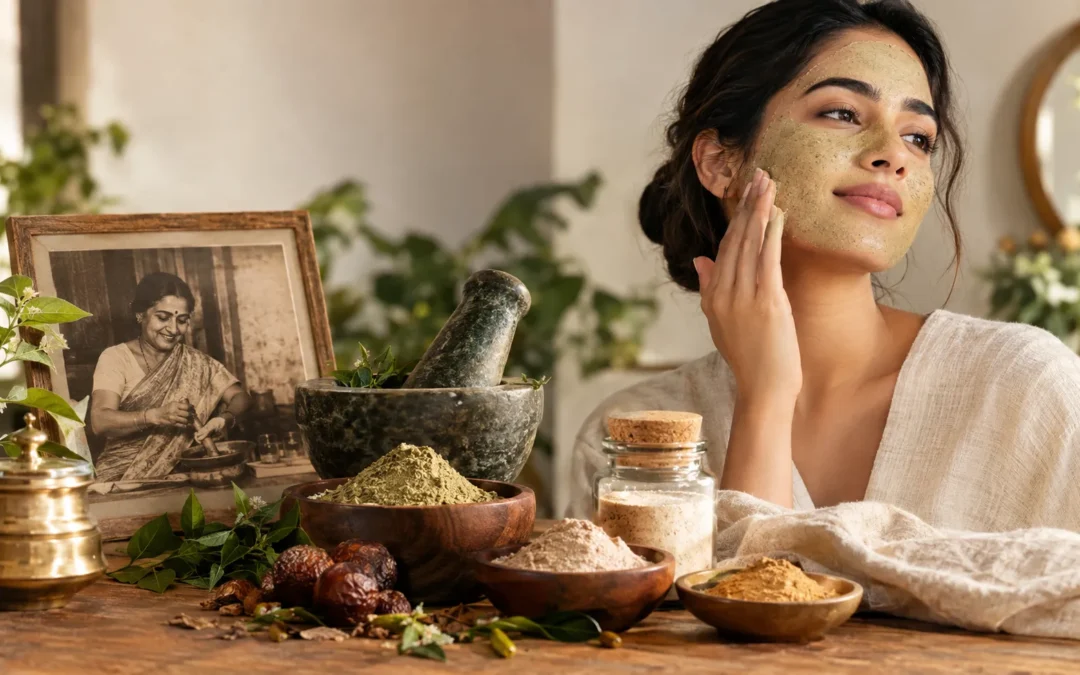
For generations, Indian hair-care routines have used ingredients such as reetha and shikakai as natural cleansing agents. Modern research has also identified saponins in both plants, compounds that can provide cleansing and surface-active properties.
But here is the interesting part:
Will your hair actually feel cleaner without shampoo?
The answer may not be what you expect.
The First Surprise: Clean Hair Doesn’t Always Feel Like Shampooed Hair
Most people have a very specific idea of what “clean” hair should feel like.
You shampoo.
You massage your scalp.
The product foams.
You rinse.
Your hair feels light, fresh and sometimes almost squeaky.
That sensation has become so closely associated with cleanliness that anything different can feel like it isn’t working.
But cleansing and foaming are not exactly the same thing.
Shampoos use surfactants to lift and remove oil, dirt and other substances from the hair and scalp. Different formulations use different surfactant systems depending on the desired cleansing strength, feel and cosmetic performance.
Traditional herbal cleansers approach the process differently.
And that difference is where the experiment gets interesting.
The “Foam Test” Might Be Misleading You
One of the first things you may notice is the foam.
Or rather, the lack of it.
Conventional shampoo can create a rich, predictable lather. Herbal cleansing mixtures may produce a lighter or less dramatic foam.
That doesn’t automatically mean they aren’t cleansing.
Reetha contains naturally occurring saponins, which are responsible for its surface activity, detergency and lathering properties. Shikakai also contains saponins and has traditionally been used as a natural hair cleanser.
So instead of asking:
“How much foam did I get?”
a better question is:
“How does my scalp and hair feel after rinsing?”
That shift in thinking can completely change the experiment.
What Reetha Brings to the Experiment
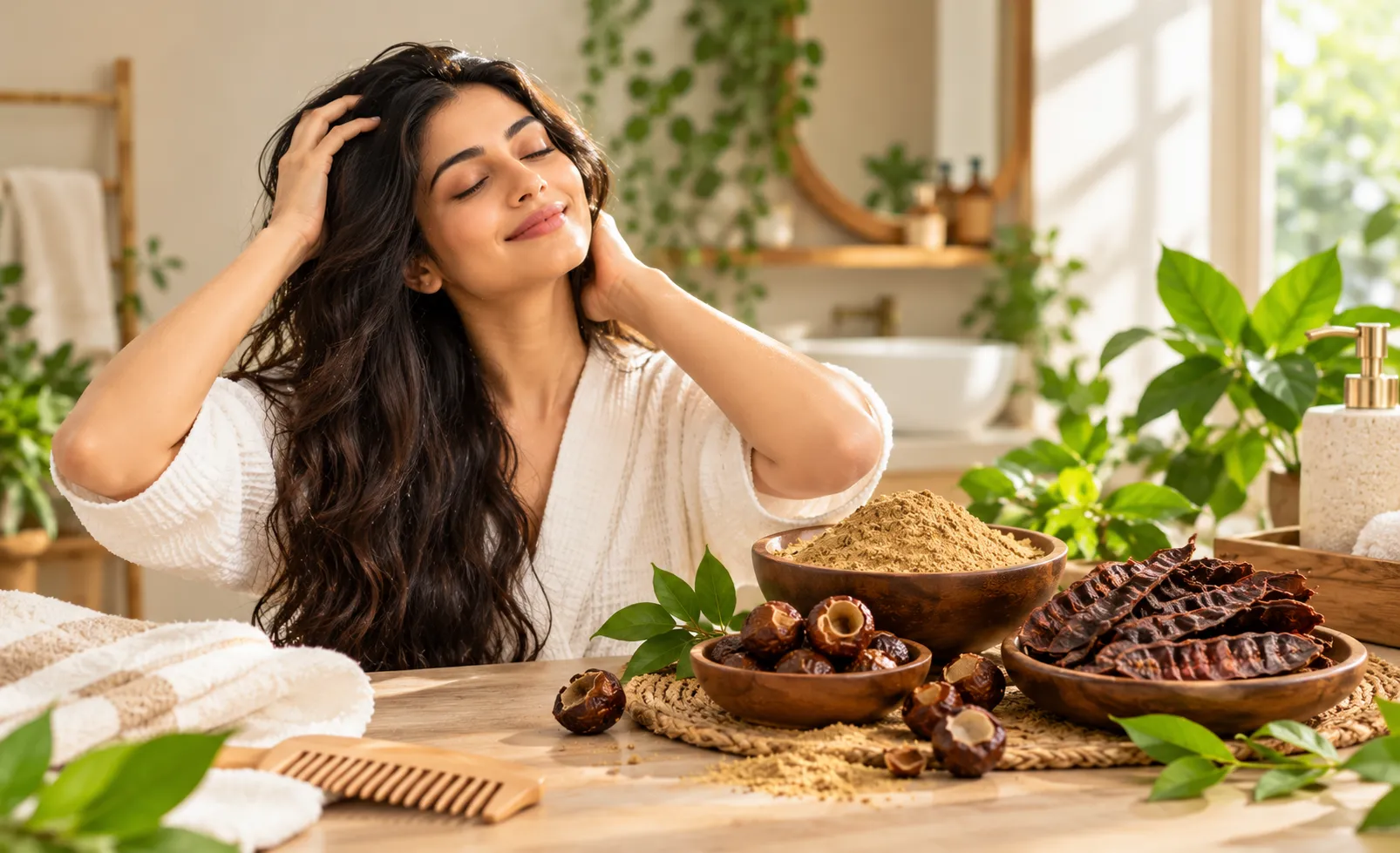
The star ingredient on the cleansing side is reetha powder.
Reetha comes from the fruit of Sapindus mukorossi, commonly known as soapnut. Its fruit pericarp contains saponins, which give the ingredient its natural cleansing and foaming characteristics.
Think of it as nature’s answer to the question:
“Can something clean without looking like conventional shampoo?”
The traditional answer has been yes.
But there is an important distinction.
Natural does not automatically mean suitable for everyone or every hair type. The concentration, preparation method, frequency of use and individual scalp condition can all affect how a cleanser feels.
For someone with an oily scalp, the cleansing experience may feel different from someone with dry or highly textured hair.
That’s why this experiment should be treated as an observation—not a universal hair-care rule.
And Then There Is Shikakai
If reetha brings cleansing power to the experiment, shikakai brings its own long history of traditional hair care.
Shikakai comes from Acacia concinna and has traditionally been used as a natural detergent for hair. Its naturally occurring saponins contribute to its cleansing properties.
The interesting thing about using shikakai powder is that the experience is very different from reaching for a ready-made shampoo bottle.
You are working with a botanical ingredient rather than a finished cosmetic formulation.
That means texture, smell, mixing, application and rinsing become part of the process.
And suddenly, washing your hair feels less like a routine and more like an experiment.
Your Scalp Becomes the Main Character
Here’s where the “No Shampoo” experiment becomes genuinely useful.
Instead of judging the process only by how your hair looks, pay attention to your scalp.
Ask yourself:
- Does your scalp feel comfortable after washing?
- Does your hair feel excessively dry?
- Does it become oily quickly?
- Does your hair feel coated or weighed down?
- Does your usual styling routine feel different?
- Does your scalp feel clean without feeling overly stripped?
These observations are more useful than simply counting how much foam appeared in your hands.
And remember: everyone’s scalp produces oil differently.
A routine that feels comfortable for one person may feel too cleansing or not cleansing enough for another.
The Biggest Change May Not Be Your Hair
It might actually be your expectations.
Modern hair care has trained us to expect certain things from a cleanser:
Foam. Fragrance. Slip. Instant softness.
A traditional herbal cleanser doesn’t necessarily provide all of those sensations.
So your first reaction might be:
“This doesn’t feel like shampoo.”
Exactly.
That’s the point.
The experiment isn’t necessarily about finding a product that perfectly imitates modern shampoo.
It is about experiencing a different cleansing method.
The “Squeaky Clean” Feeling Deserves a Second Look
There is another reason not to judge the result entirely by that squeaky feeling.
A very strong feeling of cleanliness can sometimes simply mean that a lot of surface oil has been removed.
Hair and scalp comfort are more complicated than that.
Your hair’s natural oils contribute to its feel and appearance, while the scalp has its own biological environment. Shampoo formulations are designed around balancing cleansing with cosmetic properties, which is why there are so many different formulations available.
So instead of chasing the strongest possible clean, the better goal is:
Clean enough. Comfortable enough. Suitable for you.
What About the Traditional vs Modern Debate?
This is where things often become unnecessarily complicated.
It doesn’t have to be:
Traditional = good
and
Modern = bad.
There is room for both.
Modern shampoos are carefully formulated products designed to deliver predictable cleansing, appearance and sensory benefits.
Traditional botanical ingredients offer a different approach and have a long history of use.
Research into botanical shampoo formulations has also continued to explore plant-based ingredients, their physicochemical properties and potential cosmetic applications.
The important point is to separate traditional use from proven clinical outcomes.
A traditional ingredient can have an interesting history and useful cleansing properties without automatically proving every claim you see online about hair growth, hair fall or scalp treatment.
That distinction matters.
The Part Nobody Talks About: Convenience
Let’s be honest.
There is one area where shampoo has a huge advantage:
Convenience.
Open bottle.
Apply.
Massage.
Rinse.
Done.
A traditional herbal routine can require more preparation and experimentation.
You may need to adjust the amount of powder and water, work out how to apply the mixture evenly and figure out how your hair responds.
For some people, that extra effort is part of the appeal.
For others, it may simply be inconvenient.
And that’s perfectly fine.
A hair-care routine only works if you can actually maintain it.
What You Might Notice After Making the Switch
Rather than expecting a dramatic transformation overnight, pay attention to smaller differences.
Your hair might feel:
- Different immediately after washing
- Less or more conditioned than usual
- Cleaner without the familiar shampoo sensation
- More or less manageable depending on your hair type
- Different in texture once completely dry
Your scalp may also respond differently depending on how frequently you wash and how much cleansing it needs.
The goal isn’t to force your hair into liking the routine.
The goal is to observe what happens.
Don’t Confuse “Natural” With “Risk-Free”
This is an important part of any herbal experiment.
Plant-based ingredients can still cause irritation or simply not suit a particular person.
If your scalp is sensitive, introduce any new ingredient cautiously. Avoid getting the mixture into your eyes, and stop using it if you experience significant irritation or discomfort.
Also, don’t assume that an ingredient will treat a medical scalp condition simply because it has been traditionally used for hair care.
For concerns such as persistent dandruff, severe itching, inflammation or unusual hair loss, professional medical advice is more appropriate than experimenting with cleansers alone.
What Traditional Hair Care Can Teach Modern Beauty
Perhaps the most interesting lesson isn’t that you should throw away your shampoo.
It’s that hair care doesn’t have to follow one formula.
For centuries, people have used plant-based ingredients for cleansing and grooming. Modern research has confirmed that some of these plants contain compounds with useful surface-active properties, while also showing why formulation and performance matter.
The “No Shampoo” experiment simply gives that old idea a modern test:
What happens when you stop judging hair care by foam, fragrance and instant sensation—and start paying attention to the actual result?
That question is much more interesting than whether something looks like shampoo.
Should You Try the No-Shampoo Experiment?
If you’re curious, you don’t have to turn it into a permanent lifestyle change.
Treat it like an experiment.
Try the routine cautiously, observe how your scalp and hair respond, and compare the experience with your usual cleansing routine.
Don’t judge the result only by the first wash.
And don’t assume that because something is traditional, it has to work for everyone.
The most useful result may simply be learning what your own hair prefers.
The Real Takeaway
The “No Shampoo” experiment isn’t really about choosing sides.
It is about questioning something most of us rarely question:
Why does clean hair have to feel a certain way?
Reetha and shikakai offer a fascinating glimpse into traditional cleansing practices, particularly because their natural saponins give them genuine surface-active and cleansing properties.
But the real experiment is personal.
Maybe you’ll love the simpler routine.
Maybe you’ll prefer your regular shampoo.
Maybe you’ll end up using both depending on your hair’s needs.
And perhaps that’s the most useful conclusion of all:
Good hair care isn’t about following the loudest trend. It’s about understanding what works for your hair, your scalp and your routine.