
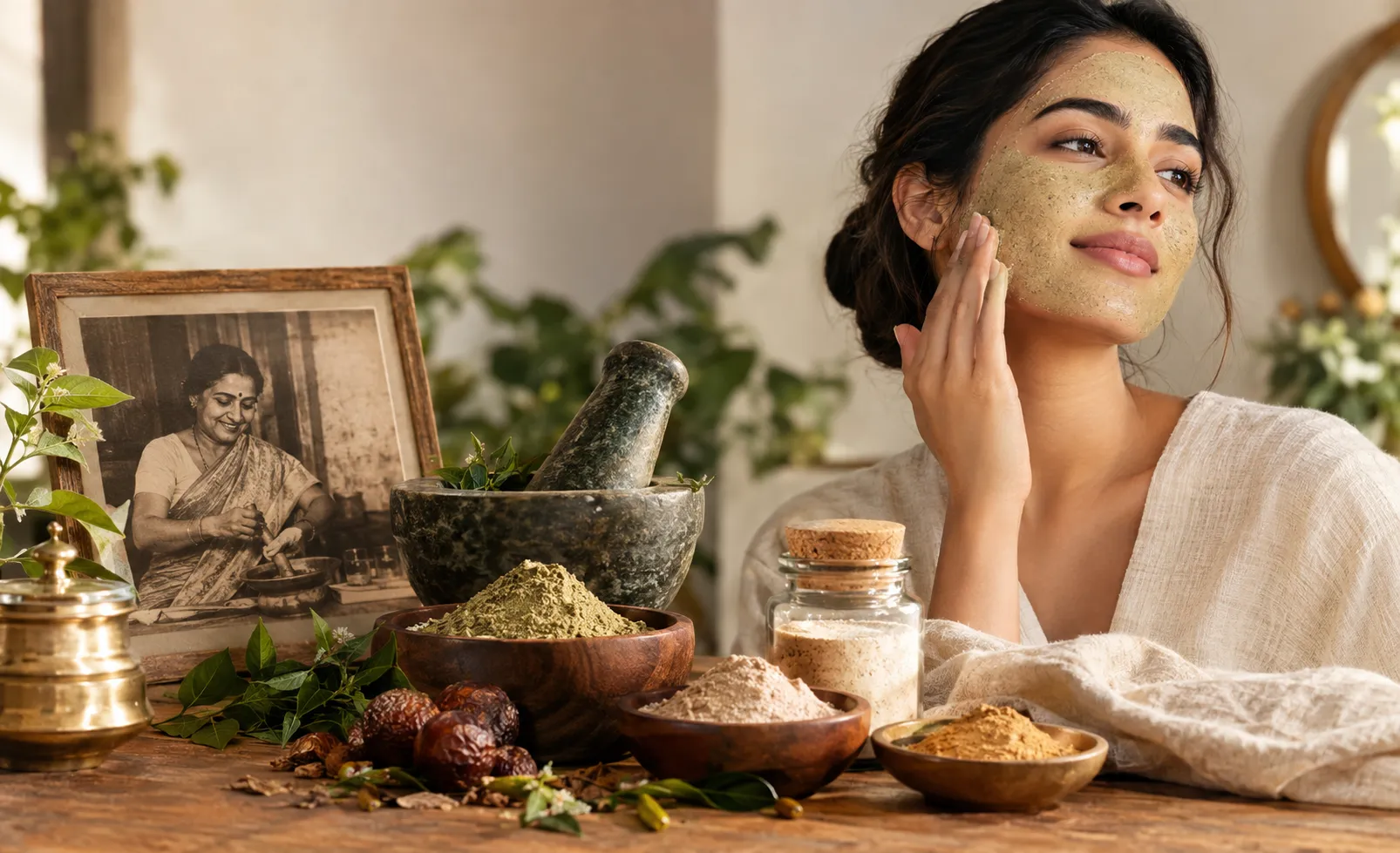
The beauty world has spent years telling us that the next breakthrough is just one product away.
A smarter serum.
A better mask.
A more advanced formula.
Another step for the morning routine.
Another one for the night.
Our bathroom shelves got bigger. Our routines got longer. And somehow, beauty became something we had to keep up with.
Then something unexpected happened.
People started looking backwards.
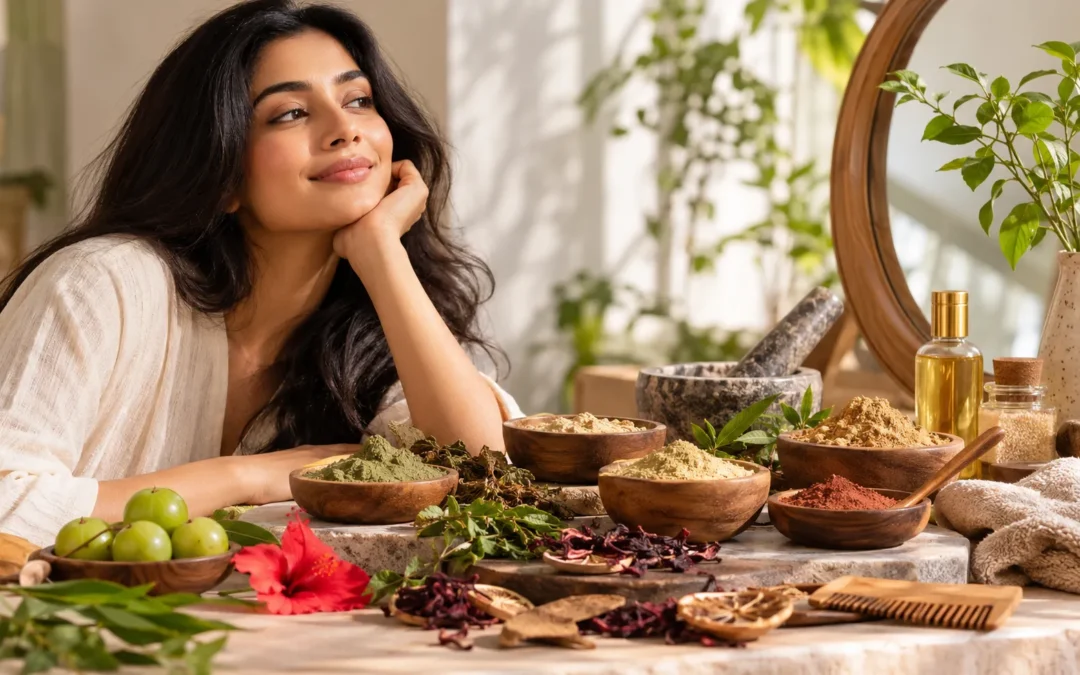
Not towards an old-fashioned bottle or a forgotten beauty brand, but towards the powders that once sat quietly in their grandmothers’ cupboards.
The funny thing?
These ingredients never really went anywhere.
They were always there.
We simply stopped paying attention.
So why are modern beauty lovers suddenly interested in them again?
The answer has less to do with nostalgia than you might think.
The Beauty Shelf Got Bigger. Did the Routine Get Better?
There is a strange moment that happens when you clean out a bathroom cabinet.
You find products you bought because they were trending.
A serum you used twice.
A mask you forgot about.
A bottle that promised to solve a problem you no longer remember having.
Modern beauty has given us extraordinary choice, but choice can also create clutter.
And eventually, people start asking a very different question:
“What do I actually want from my beauty routine?”
That question has made simplicity interesting again.
Instead of automatically adding another product, people are becoming curious about individual ingredients and older beauty practices.
Suddenly, something that looks almost too ordinary to be exciting starts getting a second look.
- A powder.
- A bowl.
- A little preparation.
And a routine that doesn’t need an instruction manual with twelve steps.
Then Came the beauty box nobody thought was interesting
For previous generations, beauty didn’t always arrive in finished packaging.
It could begin with something already sitting at home.
Traditional Indian beauty practices included botanical preparations, powders, pastes, oils and face packs, with personal care often connected to household routines and cultural traditions.
There was no need to call this a “beauty trend.”
It was simply part of life.
That’s what makes today’s revival so fascinating.
We’re taking things that once seemed ordinary and viewing them through completely different eyes.
What was once simply “the powder we use at home” can now become an ingredient someone researches for an entire evening.
And that brings us to the biggest change between then and now.
What Happens When the Ingredient Becomes More Interesting Than the Product?
Modern beauty has trained us to notice products first.
- The bottle.
- The packaging.
- The texture.
- The promise.
But ingredient-conscious beauty changes the order.
Now, people may notice the ingredient before they care about the product around it.
That shift is one reason amla powder continues to attract attention among people exploring traditional hair-care practices.
For an older generation, it may have been completely unremarkable.
For someone discovering it today, there are questions everywhere.
- Where does it come from?
- Why has it been used traditionally?
- How does it fit into modern hair care?
- What does research actually tell us?
Research has examined traditional herbal hair-care formulations containing ingredients such as amla and other botanicals, showing that these ingredients have long been considered in herbal cosmetic preparations.
The powder didn’t suddenly become interesting.
Our questions became better.
The Foam Test May Have Been Wrong All Along
Here’s a beauty habit almost nobody questions.
We expect shampoo to foam.
A rich lather feels satisfying. It makes the washing process feel productive.
But what if that sensation isn’t the only way to think about cleansing?
Traditional hair-care practices offer a different perspective.
Soapnut fruit contains naturally occurring saponins and has long been associated with cleansing preparations. Modern research has also examined botanical ingredients used in herbal hair-care formulations.
That doesn’t mean traditional cleansing should automatically replace modern shampoo.
It simply gives us something worth thinking about.
We’ve become so accustomed to a particular beauty experience that we sometimes mistake the experience for the purpose.
And that’s one reason reetha powder has found its way back into conversations around traditional hair care.
Not because foam is bad.
But because people are beginning to ask what is actually behind it.
Why Are People Making Time for Hair Rituals Again?
Convenience won the beauty industry for a reason.
- Open the bottle.
- Apply the product.
- Rinse.
- Done.
There is nothing wrong with that.
Most of us are busy.
But there is something appealing about a routine that asks you to slow down for a moment.
Measure something.
Mix it.
Prepare it.
Actually pay attention to what you’re doing.
Traditional beauty often had that quality.
It wasn’t always about getting the routine over with.
Sometimes, the preparation was part of the ritual.
That may help explain why ingredients with a long history in traditional hair care continue to attract new audiences.
Shikakai powder is one example. Its association with traditional hair cleansing has also made it a subject of modern interest in botanical hair-care research.
The modern version doesn’t necessarily recreate the old routine exactly.
It simply borrows the idea that beauty can sometimes be an activity rather than another task to tick off.
Some Beauty Secrets Were Never Meant to Be Complicated
There’s a particular charm in ingredients that don’t require you to understand an entire marketing campaign before using them.
You recognise the name.
You recognise the ingredient.
Maybe you’ve seen it at home.
Maybe someone in your family used it.
Or maybe you’ve never encountered it before and are discovering it now.
That sense of familiarity is part of the reason traditional botanicals continue to attract attention.
Brahmi powder, for example, connects today’s curious consumer with a much older tradition of botanical hair-care practices.
And that connection is important.
Because modern beauty often tells us that something has to be new to be exciting.
Traditional beauty quietly suggests another possibility:
Something can be old and still be worth discovering.
The Kitchen Has Always Been Closer to the Beauty Room Than We Thought
Walk into an older Indian household and the distinction between “kitchen ingredient” and “beauty ingredient” may not have been as strict as it is today.
Some ingredients were simply useful in different contexts.
That familiarity continues to influence how traditional beauty is perceived.
Take turmeric powder.
It is so familiar that it hardly seems like a beauty ingredient at first.
Yet turmeric has a long history in Indian traditions, and modern research has examined compounds associated with turmeric in dermatological and cosmetic contexts.
The interesting part isn’t that an old ingredient has suddenly become fashionable.
It’s that today’s consumer can look at it and think:
“I’ve known this ingredient forever. But what else don’t I know about it?”
That is where rediscovery begins.
Then Social Media Found What Families Already Knew
Traditional beauty knowledge used to move slowly.
One generation taught another.
A recipe stayed within a family.
A particular preparation belonged to a particular household.
Now, one video can change that.
Someone posts an old beauty ritual.
Thousands of people see it.
Someone recognises the ingredient.
Someone else searches for it.
Another person tries it.
And suddenly, a practice that might have remained within one family becomes part of a much larger conversation.
That has given traditional beauty a strange new life.
An ingredient such as hibiscus powder can now be encountered by someone who has never seen it used traditionally at home.
The knowledge has travelled.
The format has changed.
The story continues.
The Face-Pack Memory Never Really Left
There is something almost universal about the idea of sitting down with a bowl and preparing a face pack.
It feels slower.
More deliberate.
Less like applying a product because the bottle told you to and more like setting aside a few minutes for yourself.
Historical literature on Indian cosmetics describes the use of face packs and natural preparations as part of traditional personal-care practices.
Today, those ideas are being rediscovered in a very different environment.
People have access to professionally formulated skincare, dermatological advice and an enormous range of products.
Yet the appeal of a simple preparation hasn’t disappeared.
That is part of the reason multani mitti remains recognisable in modern conversations around traditional skincare.
The interesting part isn’t whether the past should replace modern skincare.
It shouldn’t.
The interesting part is why a ritual that once felt completely ordinary can still capture attention today.
But Is “Traditional” Enough?
This is where the conversation needs some honesty.
An ingredient being traditional doesn’t automatically make every claim about it true.
And something being modern doesn’t automatically make it better.
Traditional use gives us history.
Scientific research gives us another way of examining ingredients.
The two shouldn’t be confused.
Research into herbal cosmetics continues to grow, but the amount and quality of evidence varies between ingredients, formulations and specific claims.
That matters because today’s beauty consumer has access to information previous generations didn’t.
Instead of simply asking:
“Did people use this?”
we can ask:
“What do we actually know about it?”
That is a much more interesting question.
And it makes the revival more thoughtful than simply calling everything “natural” and moving on.
Some Ingredients Are Being Discovered for the First Time
Not everyone grew up with traditional beauty practices.
For some people, the current interest isn’t nostalgia at all.
It’s exploration.
They are encountering ingredients that their grandparents may have known but their own parents never used.
That opens a completely different door.
An ingredient like manjistha powder can introduce someone to a traditional botanical that may have been completely absent from their childhood routine.
The same curiosity can lead people to ingredients associated with different regions, families and traditions.
The beauty shelf becomes less about following one universal routine and more about discovering what exists beyond it.
Then Beauty Started Talking to Wellness
Another change happened quietly.
Beauty and wellness began moving closer together.
People stopped thinking about skincare, hair care and personal wellbeing as completely separate conversations.
That brought additional traditional botanicals into the spotlight.
Ashwagandha powder is one example of an ingredient whose traditional history has become familiar to a much wider modern audience.
But the important point isn’t to turn every traditional ingredient into a miracle story.
It is to recognise how dramatically the audience has changed.
An ingredient once known within a particular cultural context can now be researched, discussed and interpreted by people all over the world.
The Beauty Shelf Is Becoming a Conversation
Something interesting happens when traditional ingredients enter modern bathrooms.
They don’t necessarily replace everything already there.
A modern cleanser can stay.
A favourite shampoo can stay.
A serum can stay.
But suddenly there is room for something that doesn’t fit the usual beauty-product formula.
That is where neem powder can enter the conversation—not as a reason to abandon modern skincare, but as another traditional botanical that people may want to learn about.
The modern consumer is increasingly comfortable mixing influences.
- A little modern.
- A little traditional.
A routine that makes sense for them rather than one dictated entirely by a trend.
We’re Not Going Back. We’re Choosing What Comes Forward.
This is perhaps the biggest misunderstanding about the entire revival.
People aren’t necessarily trying to recreate their grandmother’s bathroom cabinet.
They can’t.
Their lifestyles are different.
Their schedules are different.
Their access to products and information is different.
Instead, they are selecting pieces of older knowledge that still interest them.
Sometimes that might mean exploring methi powder as part of an interest in traditional botanical hair-care practices.
For someone else, the attraction may simply be the experience of preparing an ingredient rather than reaching for another ready-made product.
The past isn’t being copied.
It is being edited.
And Maybe That’s Why These Powders Feel So Different Today
Think about what happened.
First, beauty became more complicated.
Then consumers became more ingredient-conscious.
Then social media made old traditions easier to discover.
Then people started questioning whether every routine needed another step.
And suddenly, ingredients that had never really disappeared started looking interesting again.
Not because someone declared them fashionable.
Because people started asking questions.
That is a much stronger reason for a beauty tradition to survive.
Maybe We Don’t Want Grandma’s Routine. Maybe We Want Her Confidence.
This is the part that stays with you.
Our grandmothers didn’t necessarily have endless choices.
They had what they knew.
They understood the ingredients that were part of their routines.
They learned from people around them.
Today, we have the opposite problem.
We have almost too much choice.
So perhaps what we’re rediscovering isn’t a specific routine at all.
It’s the confidence to stop and ask:
- What am I using?
- Why am I using it?
- Do I actually need it?
- Where did this idea come from?
Those questions can make a beauty routine feel more personal.
And perhaps that’s why even something as simple as moringa powder can attract attention in a world filled with highly engineered beauty products.
The ingredient doesn’t need to compete with them.
It simply offers another story.
The Real Comeback Isn’t the Powder
The powders were never really gone.
They remained in cupboards.
They remained in family memories.
They remained in traditional practices.
What disappeared for a while was our attention.
Now we’re looking again.
But we’re looking differently.
With modern research.
With better access to information.
With more awareness of ingredients.
With a desire for simpler routines.
And sometimes, with a little nostalgia.
That is what makes this revival so much more interesting than another passing beauty trend.
We’re not necessarily going backwards.
We’re taking a second look at what was already there.
The Takeaway
The beauty world will always have something new to sell us.
There will always be another trend, another formula and another must-have product.
But perhaps modern beauty lovers are beginning to realise that new isn’t the only thing worth exploring.
Sometimes an ingredient with generations of history can raise better questions than the newest product on the shelf.
Not because the past was perfect.
Not because modern beauty has no value.
But because somewhere between traditional knowledge and modern understanding lies something worth keeping:
curiosity.
And maybe that is why the powders our grandmothers once used are finding their way back into modern beauty routines.
They didn’t become interesting again.
We simply became curious enough to look at them.